简体中文
English
简体中文
News & Blog
The latest product releases, company updates, and practical tutorials for building with M5Stack.
News
Blog

On November 18, 2024, M5Stack opened its doors to individual visitors for the first time. More than 70 visitors from all around the world attended the event, with some showcasing their projects built with M5 products or sharing their stories with M5Stack.

M5Stack Open Day 2024

The event began at 3:00 PM, with many visitors checking in and receiving their gifts—custom T-shirts featuring the M5Stack logo. After a group photo, the first agenda kicked off: The Factory and Office Tour.

M5Stack Factory and Office Tour

The visitors were divided into three groups, with introductions provided in Chinese, English, and Japanese. M5Stack operates an all-in-one facility where product design, production, packaging, quality control, marketing, and shipping are seamlessly managed under one place. Visitors could take a close look at the whole flow.

Factory of M5Stack

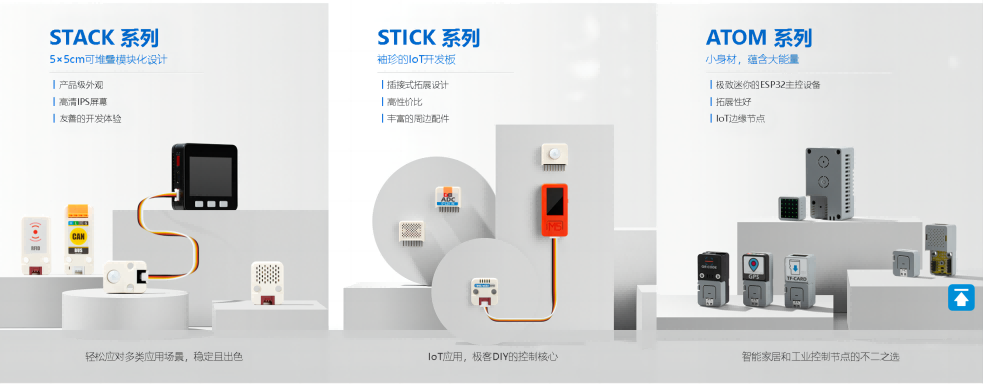
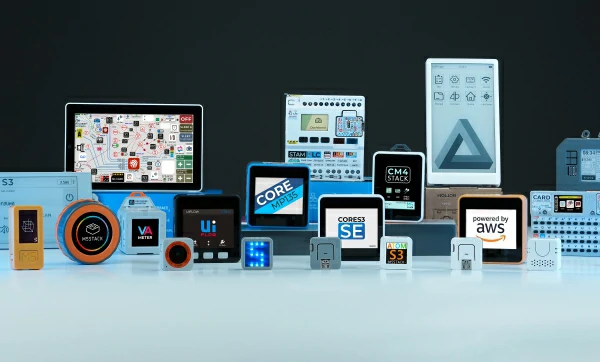
In the show board area, we display all the products we've created so far, including the classic 5x5 stack series—such as M5Basic Core, M5Core2, M5Core3, and Stick series—like the M5StickC, along with the Stamp Series (M5Cardputer, M5StampFly), and the Atom series (M5Atom Echo), among others. M5Stack’s CEO, Jimmy Lai, also explains "What is M5Stack?"

M5Stack product show board

M5Stack is an open-source hardware IoT solution provider, primarily focused on products built around the ESP32. We also offer a range of accessories and our own visual programming platform, UIFlow. The "M" in M5Stack stands for Module, "5" represents the 5x5 cm size, and "Stack" refers to their stackable design. 

M5Stack is committed to delivering convenient, stackable and easy-to-use development components and tools, with at least one new product every Friday, we launch over 50 new products every year. We provide not only standard products, also customized products. Our partner includes Amazon, Microsoft, Arduino, SONY, etc.

Projects or Stories with M5Stack

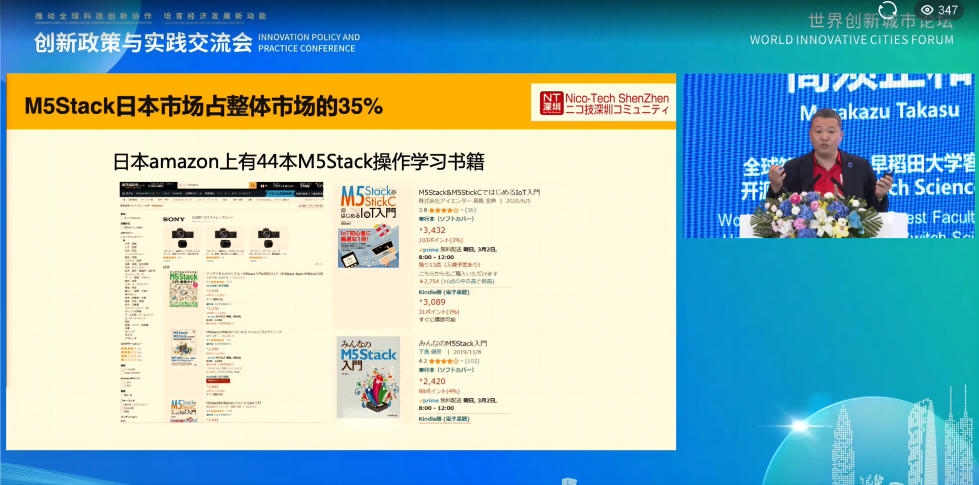
After the tour, it’s time for the Meetup. This year, we have 9 speakers. Jimmy began by sharing the company’s history, followed by presentations from the speakers. TAKASU Masakazu shared the success stories of M5Stack in Japan, where the Japanese market accounts for 35% of M5Stack’s global sales. Many companies and schools in Japan use M5Stack products, and you can even find books on how to use M5Stack products on Amazon. 

TAKASU Masakazu share the M5Stack's successful story in Japan

Other speakers introduced their innovative projects, including the Creative Dot Matrix Clock, the M5Unified Library, M5Cuffbox, and the Blue Tears Incubator, how to make stack-chan bigger, etc.

speaker shows his 3 projects using M5stack's product

It was a truly enjoyable experience to come together with M5Stack fans from all over. We appreciate everyone’s enthusiasm and participation, and we’re already looking forward to welcoming you again next year. See you then!

M5Stack Open Day 2024

2025-03-31

Time flies, and 2023 has come to an end. M5Stack's products and services have accompanied users worldwide throughout the year. 2023 was a year of continuous innovation for M5Stack, with 76 new products released at a rate of one per week. As we set sail for 2024, let's look back at the brilliance of the past year and unveil the top 10 best-selling products of 2023!

 1. ATOM LITE

Once again, Atom Lite tops this year's list of best-selling products, following on from last year's success. Launched in 2020, Atom Lite's outstanding features and enduring vitality have won over a wide range of users worldwide.

Atom Lite user case @Peter Neufeld

Atom Lite is a compact development board, measuring only 24 * 24mm, which provides more GPIO pins for users to customize freely. It is particularly suitable for embedded smart hardware development.

This development board uses the ESP32-PICO-D4 solution as the main controller, integrating Wi-Fi module and built-in 3D antenna. It has 4MB of SPI flash memory, as well as Infra-Red (IR) infrared, RGB LED, buttons, and GROVE/HY2.0 interfaces. Additionally, the onboard Type-C interface enables fast program uploading and downloading, and there is an M2 screw hole on the back for fixation.

2. ATOM ECHO

Also released in 2020, Atom Echo has undoubtedly become a dark horse product this year. In 2023, with the power of Home Assistant and ChatGPT, the Atom Echo has sold out again and again. The ability to connect to ChatGPT, act as a personal voice assistant with customisable wake words, and do it all for just $13 makes it a must-have smart home device.

Atom Echo voice assistant use case @Home Assistant

Atom Echo is a programmable smart speaker. Despite its small size of only 24 * 24 * 17mm, it boasts impressive functionality. With the built-in wireless capabilities of the ESP32, it can easily connect to devices such as smartphones and tablets for seamless music playback. It can also stream specified media music via Wi-Fi.

To facilitate voice functionality, Atom Echo integrates an STT (Speech-to-Text) service internally. Users only need to burn specified firmware to enable this feature and perform various operations through voice commands. Users can also write code to integrate Atom Echo with cloud platforms like AWS and Google, utilizing the built-in microphone and speaker for voice interaction, enabling certain AI capabilities, such as voice control, intelligent conversations, and IoT functionalities.

The speaker has a built-in RGB LED (SK6812) that visually displays the connection status. In addition to being used as a smart speaker, it still retains the control capabilities of the ATOM series and can be connected to external devices via the GROVE interface. The M2 screw hole on the back facilitates secure installation.

3. M5STICKC PLUS

M5StickC Plus is a powerful, portable and expandable development board. Since its release in 2020, it has consistently been at the top of various best-seller lists. At the end of 2022, we welcomed M5StickC Plus2 and officially said goodbye to M5StickC Plus.

M5StickC Plus is a powerful microcontroller module that is compact and easy to carry. Despite its small size, M5StickC Plus integrates rich hardware resources, including infrared, RTC, microphone, LED, IMU, buttons, buzzers, and PMU.

M5StickC Plus is equipped with the ESP32-PICO-D4 processor, providing powerful computing and communication capabilities. It features a 1.14-inch color TFT display that can show images, text, and user interfaces, offering a good interactive experience. Additionally, M5StickC Plus has a built-in battery for standalone use, eliminating the need for an external power source.

The module is equipped with various sensors, including an accelerometer, gyroscope, and magnetometer, enabling it to sense and measure object motion and environmental conditions. It also has Wi-Fi and Bluetooth connectivity, allowing data transmission and remote control with other devices. The interface supports HAT and Unit series products. This compact and exquisite development tool inspires endless creative possibilities.

4. M5CORE2

M5Core2 is the second-generation host of the M5Stack Core series, featuring an ESP32 chip and a touchscreen. It is known for its easy stacking, expandability, and rapid development capabilities. Since its release in 2020, Core2 has consistently been a hot seller in both domestic and international markets, loved by a large number of users. Amazon Web Services (AWS) and M5Stack have collaborated to launch Core2 for AWS. Now, we have the Core2 V1.1 version.

M5Core2 is a versatile development kit with a 2-inch IPS touchscreen display. It is built around the ESP32 microcontroller, which provides Wi-Fi and Bluetooth connectivity. The Core2 module offers a variety of built-in features, including an accelerometer, gyroscope, magnetometer, speaker, microphone, and more.

The development kit supports UIFlow, a graphical programming interface, as well as Arduino and MicroPython. This allows users to choose their preferred programming language and easily develop applications. The modular design of M5Core2 enables stacking of additional modules, called Units, on top of the base module, expanding its capabilities and creating custom projects.

M5Core2 also includes a built-in 390mAh battery, enabling portable and standalone use. It has a USB Type-C interface for charging and programming, as well as an SD card slot for extended storage.

5. ULTRASONIC I2C Unit

Ultrasonic I2C Unit is an ultrasonic ranging sensor with an I2C communication interface. The hardware features the RCWL-9620 ultrasonic ranging chip paired with a 16mm probe, enabling precise ranging within a range of 2cm to 450cm (with an accuracy of ±2%). As an I2C slave device, the sensor can share the bus resources with other I2C devices, allowing for efficient use of IO pins. It is ideal for applications such as obstacle avoidance in robots and liquid-level detection.


6. ENVIII Unit

ENV III is an environmental sensor that integrates the SHT30 and QMP6988 sensors, used for detecting temperature, humidity, and atmospheric pressure data. The SHT30 is a high-precision, low-power digital temperature and humidity sensor that supports the I2C interface (SHT30: 0x44, QMP6988: 0x70). The QMP6988 is an absolute pressure sensor designed for mobile applications, known for its high accuracy and stability, making it suitable for environmental data collection and monitoring projects.


7. AtomS3

AtomS3 is a highly integrated programmable controller based on the ESP32-S3 main controller. It features an ESP32-S3 main controller with built-in Wi-Fi capability and an 8M onboard flash memory. The controller also includes a 0.85-inch IPS screen with programmable buttons below it. Additionally, it is equipped with a 5V to 3.3V circuit, a 6-axis gyroscope sensor (MPU6886), an onboard Type-C interface (for power and firmware download), an HY2.0-4P expansion port, and six GPIO pins and power pins reserved at the bottom for easy expansion of various applications.

With a product size of only 24x24x13mm, the AtomS3 is perfect for various embedded smart device applications. It provides powerful functionality and flexible expandability, making it suitable for developing a wide range of embedded systems and smart devices.

8. PIR Motion Unit

PIR Motion Unit is a human infrared sensor unit. It belongs to the "passive infrared detector" category and works by detecting the infrared radiation emitted or reflected by humans or objects. When infrared radiation is detected, it outputs a high-level signal and maintains a delay for a certain period (keeping the signal high and allowing for repeated triggering) until the trigger signal disappears (returns to a low level). The PIR Motion Unit is suitable for various applications that require detecting human activity and motion, including security, automation, energy management, and people counting.

9. BASIC V2.7

Basic is the first-generation host of M5Stack, offering high cost-effectiveness and a rich collection of case resources. Through continuous optimization and development, it has now iterated to the V2.7 version.

Basic V2.7 features a 2.0-inch color TFT LCD screen with a resolution of 320x240, which can display graphical interfaces and text information. It is also equipped with three programmable buttons, a programmable touchscreen, a speaker, and a set of expansion pins to support the connection and expansion of various peripheral devices.

This development board uses the ESP32 Internet of Things chip, integrates Wi-Fi capability, and has 16MB of SPI flash memory. As a low-power dual-core processor, it performs exceptionally well in various application scenarios.

10. ATOM U

ATOM U is a compact and flexible Internet of Things voice recognition development board. It uses the Espressif ESP32 main control chip with two low-power Xtensa® 32-bit LX6 microprocessors, operating at a high frequency of up to 240MHz. ATOM U integrates USB-A interface, IR emitter, and programmable LED lights, allowing for plug-and-play convenience for program uploading, downloading, and debugging. It also includes a Wi-Fi module and a built-in digital microphone (SPM1423 PDM) for clear audio recording, making it suitable for various IoT human-machine interaction and speech-to-text (STT) input recognition scenarios.

ATOM U supports low-code development and provides features such as UIFlow graphical programming platform, script programming, no-compilation execution, and cloud pushing. It is fully compatible with mainstream development platforms such as Arduino and ESP32-IDF.

ATOM U has a high level of integration, including USB-A programming/power interface, IR emitter, programmable RGB light, and buttons. The professionally tuned RF circuit ensures stable and reliable wireless communication quality.

M5Stack's success is inextricably linked to our community's support, and we thank you for it. We wish you a Happy New Year! We will continue to provide more and better services to meet your needs in the coming year.

2024-01-03

 The Build2gether Inclusive Innovation Challenge, hosted by Europe's top university ETH Zurich and organised by the world-renowned hardware community Hackster.io, recently concluded. The competition, in collaboration with partners M5Stack, Google, Blues, PCBWay and Useful Sensors, offered a total prize pool of $40,000.

This global competition aimed to encourage people to use innovative technology to help individuals with physical disabilities overcome challenges in their daily lives and build a more inclusive and equitable future. The competition received a total of 194 submissions, with many participants choosing M5Stack products. In this blog post, we have selected some of the award-winning projects to explore the development stories behind them!

 1.Haptic Vision Assist

This project uses M5Stack's controllers and sensors to provide simple, cost-effective and efficient obstacle warnings using infrared laser and haptic technology to visually impaired users to aid their mobility.

The author, Colonel Panic, witnessed the daily challenges faced by visually impaired people while living with his fiancée and her son, both of whom have inherited Retinitis Pigmentosa, a genetic eye disease. Motivated to help improve the lives of visually impaired people, Colonel Panic learned to use M5Stack products and UIFlow within a year. To quickly become proficient in the use of M5Stack, he challenged himself to create a prototype for a new idea every day.

Project link: https://www.hackster.io/colonelpanic/haptic-vision-assist-ac670f


2. Wall Early Warning System for Swimming Laps

This project uses Bluetooth beacon technology to warn visually impaired users when approaching the pool wall, preventing accidental collisions due to poor visibility while swimming.

Have you ever hit a wall while swimming? What about doing the backstroke? Ouch! Now imagine having poor eyesight; everything becomes even more challenging! Inspired by personal experience and discussions with disabled mentors after joining a competitive group, author David Barrett came up with the idea for this project.

Project link: https://www.hackster.io/3DPrinterDoctor/wall-early-warning-system-for-swimming-laps-4ba356

 3.Intercom and Smart Controller Mounted on Wheelchair and Roll

This project allows people who use wheelchairs or walkers to receive real-time doorbell notifications via Telegram, see who is at the door, and remotely control door access.

Imagine hearing the doorbell ring and feeling nervous. You might even rush to open the door. These actions may seem simple for able-bodied people, but they are inconvenient for people who use wheelchairs. This project effectively addresses this pain point.

Project link:

https://www.hackster.io/ecasti/intercom-and-smart-controller-mounted-on-wheelchair-and-roll-9a4691

 4. Motion Controller for People with Limited Arm Function

This project focuses on developing a motion controller for gaming purposes specifically designed for individuals with limited arm function due to conditions such as muscular dystrophy. For PC gamers, the mouse is a crucial peripheral device. However, mice require a flat surface to function properly and demand users to sit in front of a desk, constantly extending their arms, which can be challenging for some individuals with disabilities.

Therefore, Yahya Khalid created a simple controller using the compact AtomS3, which can effectively replace a mouse. With this device, users can adjust sensitivity to meet their specific needs, and hand position or orientation is not limited, accommodating individuals with restricted hand movements.

Project link: https://www.hackster.io/yahya-khalid/motion-controller-for-people-with-limited-arm-function-4e15d3

 5. Cracked road detection for better travel

This project can help people who use wheelchairs to be aware of road potholes in advance to avoid accidental falls while travelling.

One of the challenges faced by wheelchair users is encountering cracked roads, where if the user is not concentrating, they could fall into a pothole and potentially injure themselves. Hendra Kusumah aims to create a solution that is easy to build and program, requires no soldering, and costs less than $50.

Project link:

https://www.hackster.io/hendra/cracked-road-detection-for-better-travel-e00340

6. Cheza Pona

This project is an innovative gaming platform that redefines inclusive skill development, specifically designed for people with disabilities such as cerebral palsy and muscular dystrophy. Cheza Pona provides dynamic and adaptive gaming experiences.

According to a 2017 study by the World Health Organization, only 1 in 10 people with disabilities in low-income countries have access to the assistive technology they need. In response to this challenge, Ryan Kiprotich and Mergery Wanjiru proposed a solution called Cheza Pona, which means "play better" in Swahili. They transformed the typically monotonous physical therapy into an enjoyable gaming experience. Using the low-cost M5StickC, they created a game where players can use the built-in inertial measurement unit sensor to move sideways and avoid blocks in the game to score points.

Project link: https://www.hackster.io/512307/cheza-pona-2d0c47

7. Move-It!

This project turns M5StickC int to an IMU-based gaming device - a small wearable device whose movement can provide input to games.

The project was mainly aimed at developing something small which can help people with Muscular Dystrophy play games without over-exerting and tiring out faster. I won the M5Stack Gift card and ordered the M5StickC and a mini dual button unit. The idea was to use IMU input from the M5StickC as serial data and process it as keyboard input.

Project link: https://www.hackster.io/nvraghavendra2000/move-it-2371ed


2023-12-26

Source: Svet Kompjutera (World of Computers)

Author: Dejan Petrovic

Link: https://www.sk.rs/arhiva/clanak/32212/m5stack-atom-s3-atom-je-zapravo-mali

Translate: M5Stack

Last December, we covered some new products from M5Stack, one of which is the Atom S3. We got our hands on this compact device from M5Stack, and now let's write a few sentences about its introduction. In our article about M5Stack Core2, we mentioned that M5Stack's concept is to combine different microcontrollers, screens, sensors, and actuators through stacking to create a variety of completely different devices. Atom S3 also follows this principle.

esp32 device

This is an incredibly small device, measuring 24×24×13 mm and weighing only about 6.8 g. Without requiring any additional components, it can be used as a stand-alone unit (node) or as part of a larger system to perform various tasks. In fact, Atom S3 provides almost all the necessary functions to act as a control device. The core of this tiny Atom S3 is the ESP32-S3FN8 microcontroller from Espressif. We have previously written about the ESP32-S3, which features a dual-core Xtensa 32-bit LX7 processor with a clock frequency of 240 MHz, 384 kilobytes of ROM, 512 kilobytes of SRAM, and 16 kilobytes of RTC SRAM. Atom S3 sacrifices additional flash memory storage due to its size. With a 3D metal antenna, the Atom S3 can connect to a 2.4 GHz local area network, supporting the 802.11b/g/n standard with data transfer rates of up to 150 Mbps, and supports Station, SoftAP and Station+SoftAP modes.. The Bluetooth version of ESP32S3 chip is 5.0 and it also supports Bluetooth Mesh, making it convenient to communicate with other devices in the network. The data transfer rate of Bluetooth is also noteworthy, reaching up to 24 Mbps per second.

Despite its small size, Atom S3 offers quite a few peripheral devices. The first thing that catches the eye is a compact 0.85-inch LCD screen with a resolution of 128×128 pixels, which is connected to the ESP32-S3 via the SPI interface. The model of this screen is N085-1212TBWIG06-C08. We don't have much data about it, but we can confirm that the display quality is excellent. In fact, ATOM S3 consists of two PCB boards, forming a sandwich structure, with the smaller PCB located below the screen, carrying the MPU6886, which is a high-performance six-axis MEMS motion tracking device and a 6DOF (Six Degrees of Freedom) device. The MPU6886 combines a three-axis accelerometer and gyroscope with high precision and sensitivity. It is connected to the ESP32-S3 via I2C. Previously, we obtained a small add-on board called M5GOBottom2 with an MPU6886 together with the M5Stack Core2 kit. Inside ATOM S3, there is also a green LED (WS2812 RGB LED) and an IR LED (infrared emitter/transmitter).

Atom S3 can be connected to a computer using a USB-C connector, and it's worth noting that the ESP32-S3 has a direct USB port (CDC function) for programming through that port. AtomS3 is usually powered via USB-C (but can also be powered through the header connector), and the voltage regulation is handled by SY8089, which is a step-down regulator that allows an input voltage range of 3.3V to 5V and provides a maximum current output of 500mA.

In the Atom series of products, the bottom-exposed pins can be defined for functions such as I2C, SPI, UART, GPIO, and ADC. There is an expansion header connector called ATOM-MATE, which allows users to connect to other sensors, actuators, or external devices to expand the usage range by accessing the pins on the bottom of Atom. Additionally, Atom S3 has a programmable button and a programmable RGB LED that can be used for user interaction and status indication.

esp32s3 UIFlow

Atom S3 supports Arduino IDE, MicroPython, and UIFlow, which allows developers to write applications using familiar development environments and languages and leverage rich libraries and resources. M5Stack provides extensive documentation, sample code, and tutorials to help users get started and develop their own projects.

2023-09-14

Source: Svet Kompjutera (World of Computers)

Author: Dejan Petrovic

Link: https://www.sk.rs/arhiva/clanak/32306/m5stack-cores3-trece-jezgro-od-sunca

Translate: M5Stack

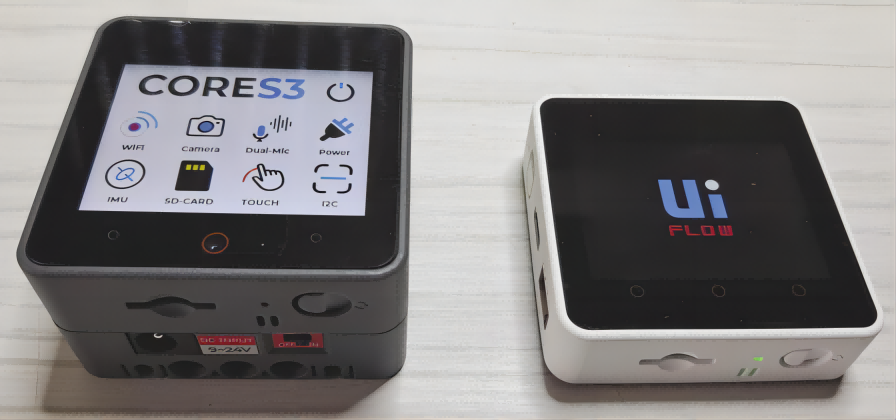
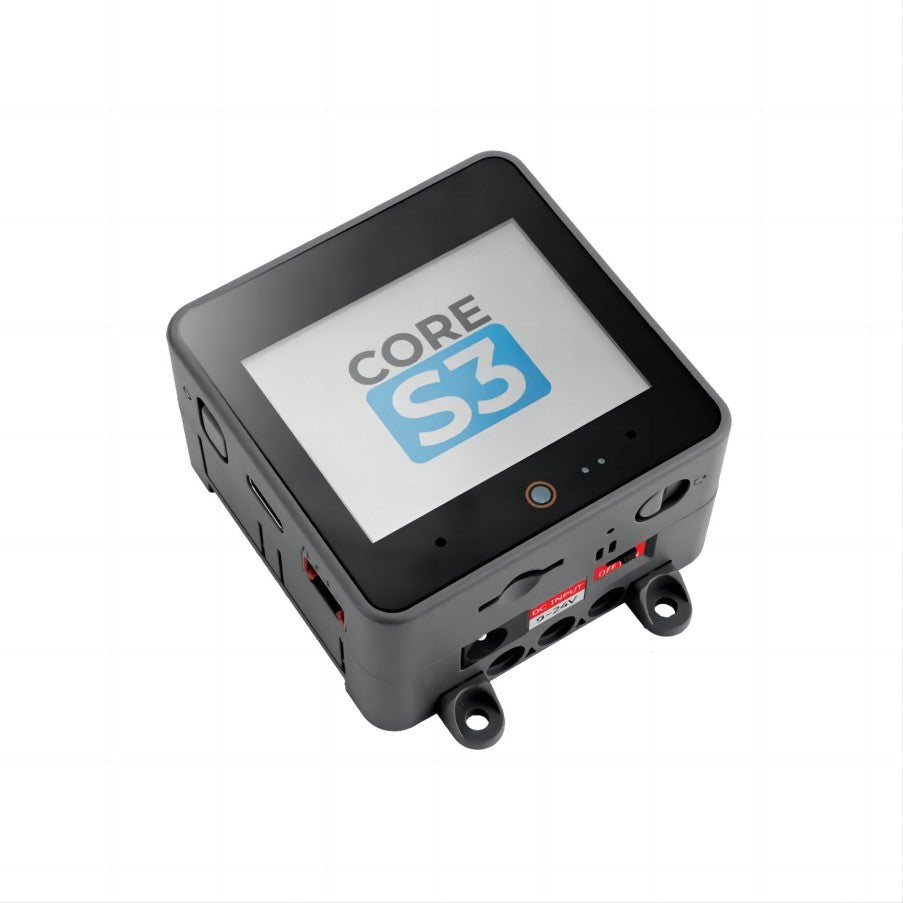
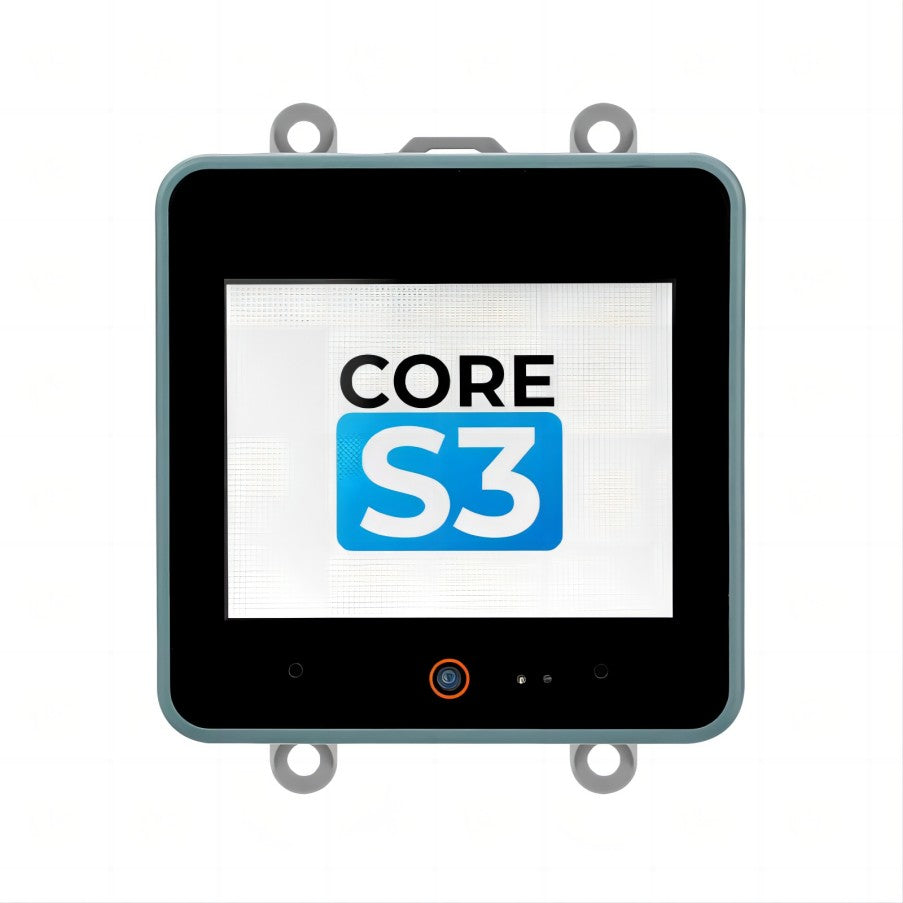
CoreS3 is the third-generation flagship product of the Core series controller launched by M5Stack. Compared to the previous Core2, CoreS3 brings more innovation and functionality. Through the continuous release of new products, M5Stack has proven that its products are not only suitable for electronic enthusiasts' projects but also widely applicable to industrial and commercial projects, providing an excellent foundation for training future engineers. CoreS3 is a strong testament to this. So what are the new features in CoreS3 compared to Core2, which was released two years ago?

CoreS3

If we compare them side by side, we will find that the dimensions of Core2 and CoreS3 are basically the same. In fact, if we ignore the color, their casings are identical. Of course, the difference lies in the hardware configuration, although there is some overlap in certain details.  Similar to the chip used in the Atom S3, which we have already mentioned several times, the M5Stack CoreS3 uses the ESP32 S3, a microcontroller from Espressif Systems.

Let's briefly review the basic features of the ESP32 S3. ESP32 S3 is a dual-core microcontroller that utilizes the Xtensa® dual-core 32-bit LX7 processor and supports 2.4GHz WiFi and Bluetooth functionalities. It offers a maximum of 16MB of optional Flash and a maximum of 8MB of optional PSRAM, sufficient to meet the requirements of any task. Users can transfer programs to the CoreS3 via the USB-C interface, which also supports OTG and CDC functionality. The USB-C interface can be used for both power and battery charging.

CoreS3 still features a 2-inch capacitive IPS screen with a resolution of 320x240 pixels. The glass screen is scratch-resistant and is equipped with an ILI9342C driver. The touch function is carried by the FT6336U, which is the same as Core2. While there isn't much difference in the screen between CoreS3 and Core2, there are significant differences in the functionality underneath the screen. Core2 only had three touch-sensitive areas underneath the screen, whereas CoreS3 is equipped with two microphones, light and proximity sensors, and a camera. In terms of audio, both devices are I2S devices with 1W power speakers, but CoreS3 has an ES7210 as a 24-bit audio ADC and an AW88298 audio amplifier. For the light and proximity sensor, CoreS3 has chosen Liteon's LTR553ALSJ proximity sensor, which can measure a range from 0.01 lux to 64K lux with a 16-bit resolution. The proximity sensor consists of a standard LED (emitter and receiver), and users can determine the distance using an 11-bit resolution. Lastly, CoreS3 also features a GC0308 camera with a 300,000-pixel sensor. The camera sensor has a 10-bit ADC resolution and supports VGA video at a maximum of 30 frames per second.
The CoreS3's metal casing hides even more interesting sensors. For accelerometer and gyroscope sensing, it features the Bosch BMI270. The BMI270 offers a 16-bit resolution for six-axis sensing. If you thought there should be a compass sensor next to such a sensor, M5Stack has already taken the lead. On the CoreS3, it also houses the Bosch BMM150, a three-axis magnetometer sensor with a resolution of 0.3 μT. But that's not all. Next is the BM8563 RTC, capable of displaying seconds, minutes, hours, days, months, and years. It supports both 24-hour and 12-hour formats, as well as leap years. For each mentioned integrated circuit, available interrupt pins are utilized. Specifically, for the RTC, the CoreS3 can be programmed to set an alarm, making use of this functionality.

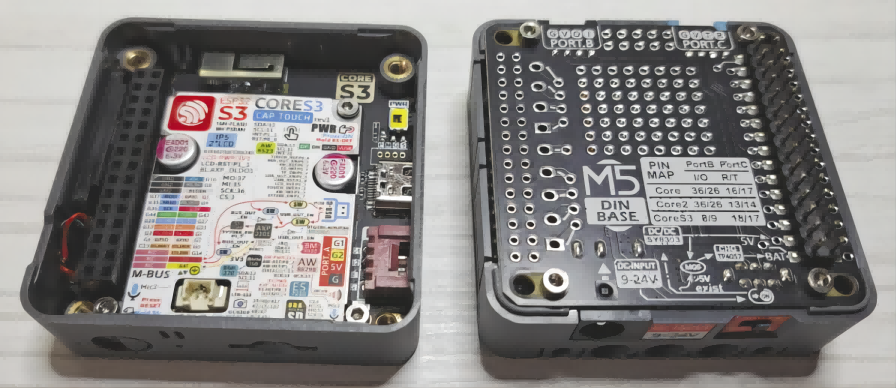
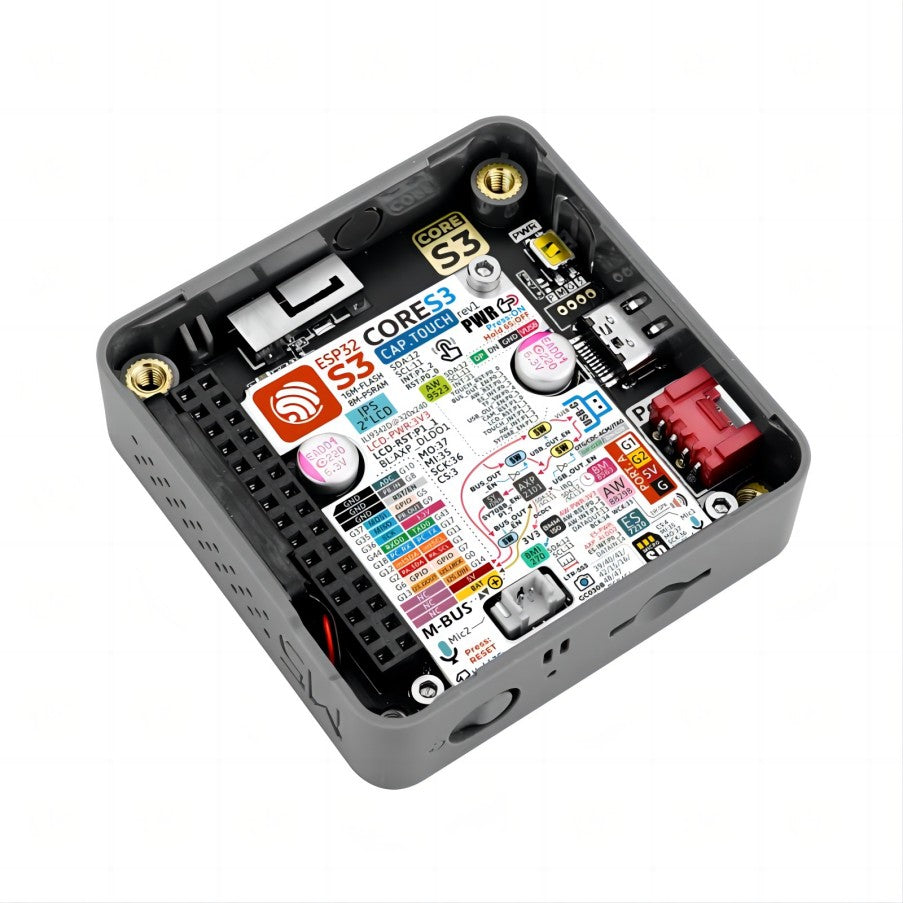
On the side of the device, CoreS3 retains the microSD card slot, reset button, and power button. Next to the USB-C interface is the I2C PORT.A. CoreS3’s bottom provides access to a 2x15 pin header and a JST battery connector. It is worth mentioning that the AXP2101 is used as the battery management chip, which is a high-performance power management chip that utilizes advanced integrated circuit technology to provide comprehensive power management functions. On the bottom of CoreS3's metal casing, there are very small but clearly visible markings that show the internal connections of the ESP32 S3 with the entire hardware. Due to the similar pin layout and compatibility with the JST connector, the Core3's Din Base is compatible with Core2, allowing for full hardware support from Core2.

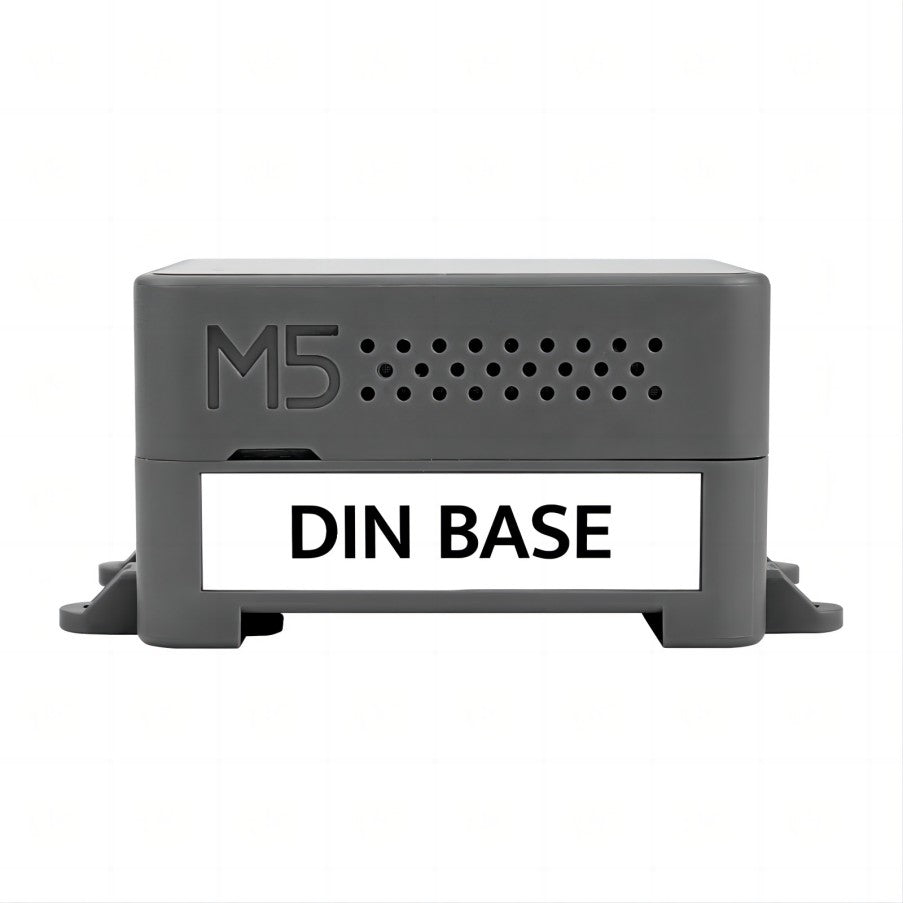
DIN Base is the default base of Core S3. This base is designed for mounting Core S3 on a DIN rail or a flat surface and comes with necessary plastic clips. The base provides additional expansion capabilities internally. The focus of the DIN Base is power management, allowing Core S3 to be powered by a voltage of 9 to 24 volts through a DC connector using the SY8303 voltage regulator. The 500mAh lithium-ion battery is located beneath the prototype PCB board and is managed together with the TP4057 integrated circuit. The power supplied to Core S3 from the base can be turned off using a small switch. The PCB board itself is a prototype board with plated through holes (PTH) that allow for the addition of hardware according to the user's needs. The side of the base casing has holes for adding additional openings for connecting probes, connectors, and so on. There are also two additional connectors, PORT.B and PORT.C, with pin mappings that are compatible with all Core series devices. Yes, the DIN Base can also be used with previous Core series hosts (all M5Stack components are mutually compatible). We also noticed three holes that allow the base to be used with the LEGO system, which has great potential among children.

The Core series controllers have multiple bases to choose from. Some of these modules are terminal bases, which are dedicated to forming complete devices with the Core, while other bases are universal, allowing them to be used with any controller from the Core series. We would like to specifically introduce the following:

AC Power Base: It allows the device to be directly connected to an AC power source.

2Relay 13.2 Module: It utilizes an STM32F030 microcontroller to provide two relays that can be controlled by the controller.

BaseX (EV3 Motor):  It can connect RJ11 LEGO motors and two servo motors, making it ideal for robotics projects, and can also be equipped with an additional microphone.

LAN Base: Based on the W5500, it allows the host to be connected to a local network via an Ethernet cable, enabling it to be used as a PLC device. This base also comes with RS485 and RS232 adapter boards.

These are several available types of bases, each with different functionalities and features to meet various application needs.

What about the software aspect?

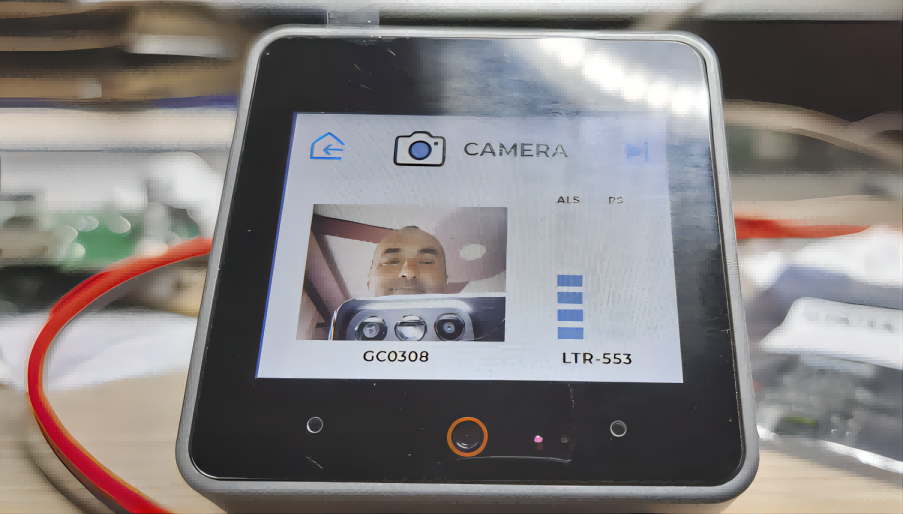
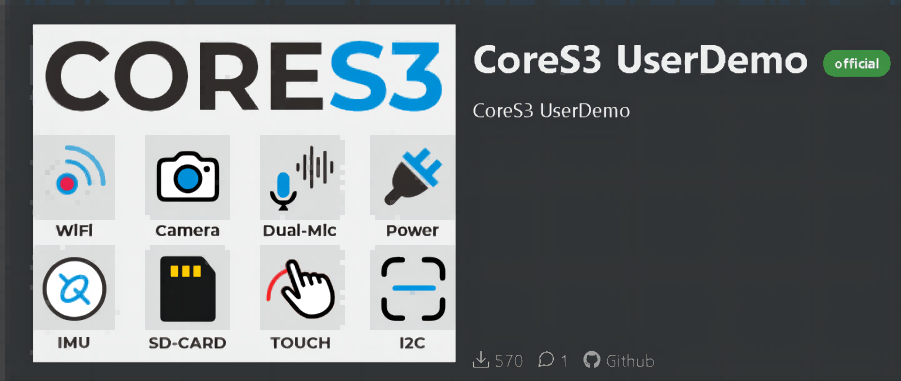
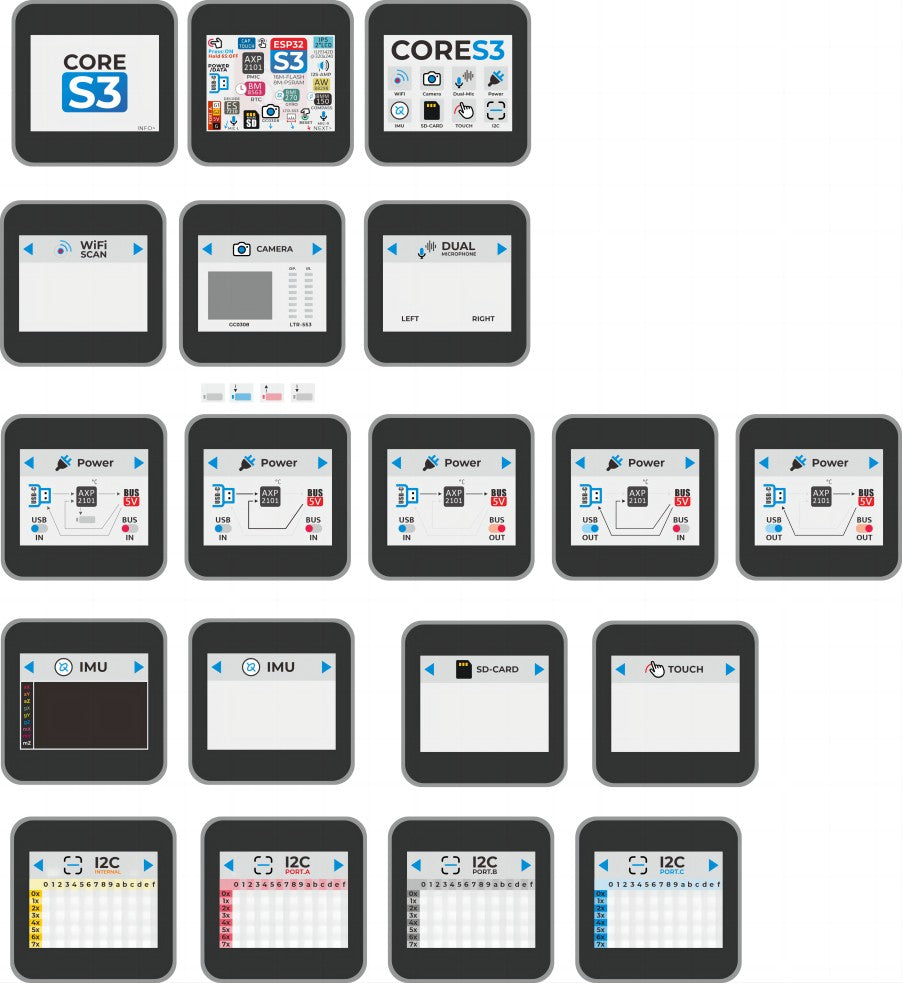
The Core S3 comes with pre-installed firmware that allows for the use of all hardware features through eight built-in applications. These applications include scanning for available local networks, listing the contents of a microSD card, checking the sensitivity of the touch screen, and scanning I2C lines to test all sensors and functionalities on the device. The most notable application is the camera app, which combines the camera function with light and distance sensors. Considering the capabilities of the camera and screen, the camera display on the screen is quite impressive, and we are satisfied with its performance. Two bar graphs on the right side of the screen display the light intensity and proximity, such as the proximity of a finger.


M5Stack has prepared some new features to support the Core S3, and one of them is EasyLoader. It is a small tool used for quickly erasing or writing firmware to the Core S3. Assuming the user program has already been written in an editor, it only requires selecting the port and baud rate values.

M5Stack controllers support large software packages for the Arduino IDE (which takes a long time to download from the internet), and M5Stack also provides support for these controllers. Regarding the added support, we have mentioned it in a previous article about the Core 2. For this ESP32S3 device, the provided support includes some examples. However, in the custom library section, there is a large group of examples prefixed with "M5," most of which are grouped according to the available bases for each Core. Each group provides several examples, resulting in a total count close to three digits, so listing all of them wouldn't make sense. Additional examples not included in the support package can be downloaded from the official GitHub page. These examples are up-to-date and are expected to appear in future updates of the Arduino IDE support. Overall, there are so many examples available for each feature of the Core that there are hardly any scenarios left uncovered.

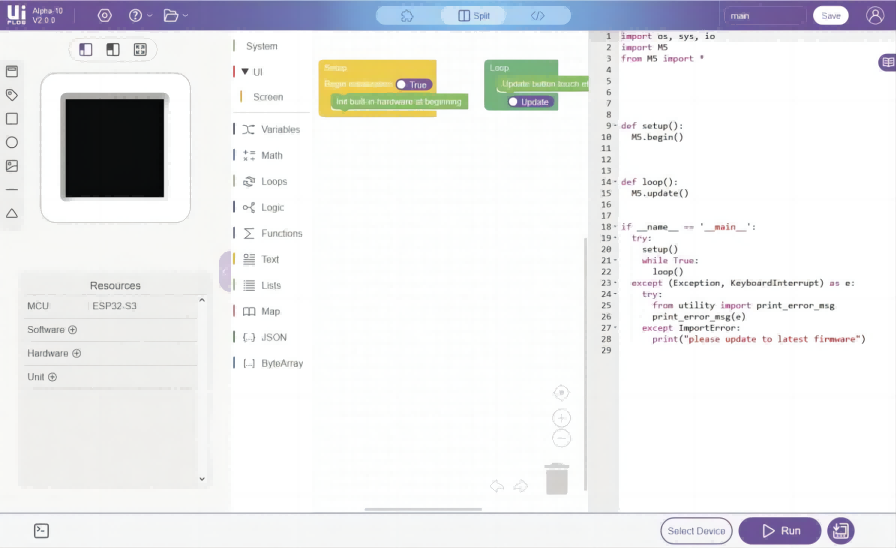
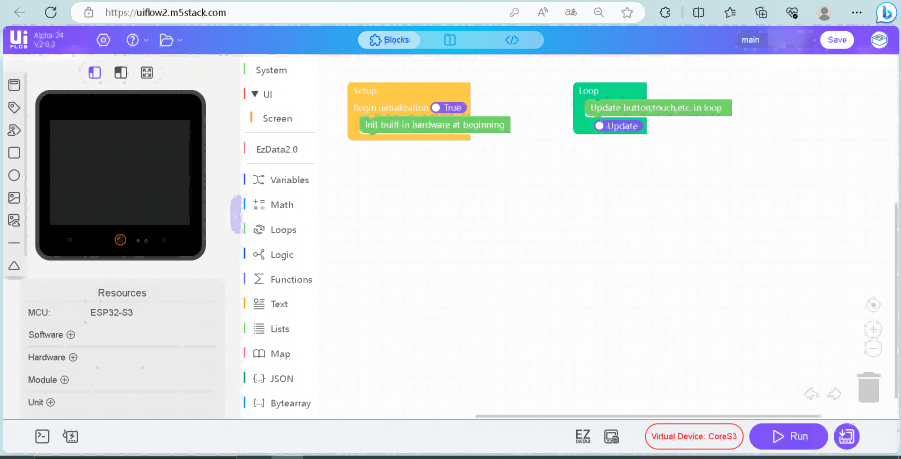
UIFlow 2, which supports all the latest devices from M5Stack, including the Core S3, has been introduced in previous articles about M5Stack devices. This "blocky" editor consists of three parts, with the ability to hide some parts for clarity when needed. The use of blocks is increasingly popular and may be the best choice for inexperienced users, especially children, as it guides them into the world of electronics and programming. When the curtain is lifted, Python code is revealed beneath the blocks. The third part of the editor is the Python editor itself, allowing complete device programming through Python without the need for block programming. The Python structure used here is largely similar to programming languages used for Arduino platform code written in C/C++. The M5Burner mentioned earlier can also be used here, but it does not support UIFlow, which means that programming through the M5Stack system without a wired connection to a computer is not possible. The tool provides some examples, including the factory examples that come with the device.

Considering the features offered by the Core S3, its price is reasonable. Additionally, by adding modules, it can provide even more functionalities to meet different needs and expectations. Imagine the power of hardware with a screen and direct data input capabilities, along with additional built-in sensors and countless sensors that can be added through ports. It is evident that the possibilities for combinations are limitless, and the Core S3 can serve as a control unit for a larger system or as the central unit of its own system. It can be used in conjunction with the LEGO system, which is an additional advantage. If you want to introduce children to electronics and programming through games and building with LEGO blocks, we believe this could be the right choice. We wholeheartedly recommend it.

2023-09-08

Despite significant advancements in technology, there are still many challenges faced by people with disabilities in their daily lives. ASSISTIVE TECHNOLOGIES have the potential to transform the lives of millions of individuals, providing them with greater independence, access, and opportunities. However, there are still many areas where these technologies fall short or simply do not exist.


That's where the Build2gether Inclusive Innovation Challenge comes in. We're calling on innovators worldwide to design cutting-edge technologies that address the unique needs of individuals with disabilities, with a total prize pool worth up to $40,000. This competition is organized by ETH Zurich and hosted by Hackster.io.As a hardware sponsor, M5Stack will provide all-round support for the participants.

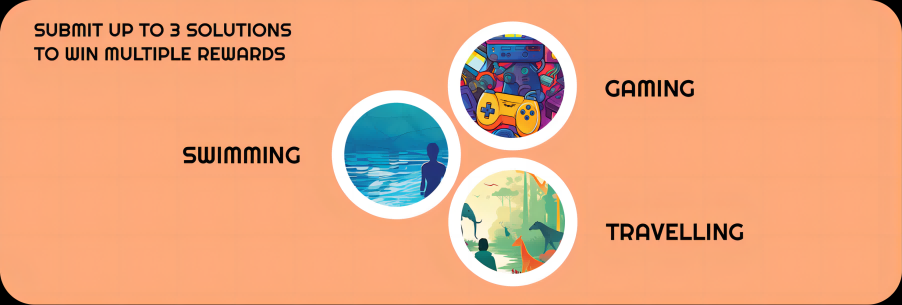
Participants are encouraged to build innovative solutions across three themes: GAMING for people with mobility impairments, TRAVELLING for people with mobility impairments, and SWIMMING for people with visual impairments. All themes will run concurrently, allowing participants the flexibility to choose and engage in any or all of them.

What sets this contest apart is the opportunity to directly engage with representatives of the disability community through Discord channels. Participants will hear firsthand about their problems and needs, and work together to create truly inclusive technologies.

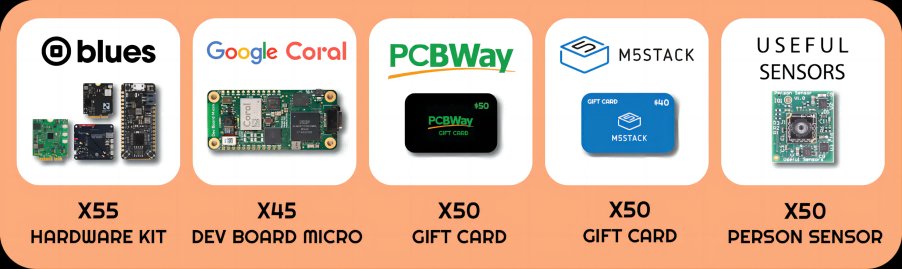
To help participants get started, 250 hardware kits are available for application until August 20, 2023, at 23:59 Pacific Time. M5Stack provides 50 gift cards of 40$ value, which can be used to buy M5Stack hardware, such as the Core2 and other powerful ESP32 microcontrollers as well as multiple sensors. And in addition to gift cards, M5Stack will provide extra support to contestants who choose to use M5Stack hardware.

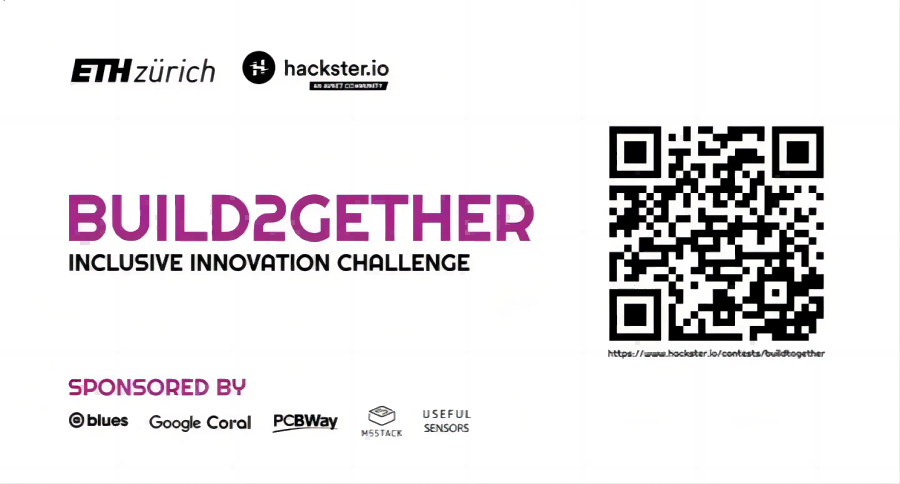
The competition will end on November 30, 2023, at 23:59 Pacific Time. Join us in building a more inclusive and equitable future for all. Scan the QR code on the image or visit https://www.hackster.io/contests/buildtogether to access the competition page and learn more.


2023-07-28

Recently, Nanyang Polytechnic's (NYP) announced the four winning teams for the M5STACK-NYP Exploration Project. 

M5Stack NYP Contest Winner

NYP Diploma in Electronic & Computer Engineering has developed an exciting new course that challenges students to design innovative smart technology solutions for retail, urban farming, smart factories, and healthy lifestyles using M5Stack's products and platform. The 30-hour course is divided into four parts, with a focus on learning about M5Stack and the UIFlow IDE, programming with IoT controllers and sensors, completing assignments and quizzes, and creating group projects.  

IoT projects with esp32 controllers and sensors

As a partner and supplier of software and hardware for this course, M5Stack is thrilled to see the creativity and enthusiasm of the students and believe the benefits of this course go beyond improving learning and increasing students' employability since it also creates opportunities for future technological advancement that will make the world better.

In the following paragraphs, we will introduce the top teams' projects and show how they have used M5Stack's technology to create amazing solutions for some of today's most pressing challenges.

Smart Energy Efficient Urban Farming  

Electricity tariffs in Singapore are rising, and research has shown that factors such as artificial light, plant competition, overwatering and humidity can affect plant growth in urban agriculture. In light of this, this project aims to develop sustainable and energy-efficient practices to address these challenges and promote environmental sustainability in urban agriculture.

To achieve this, the project includes several innovative technologies, such as a height checker that uses a TOF sensor to measure plant growth and plots the data on a dashboard. An automated sunroof adjusts the amount of natural light entering the greenhouse using a light sensor, while a moisture sensor monitors soil moisture levels to prevent overwatering. The project also features an air conditioner that uses the ENV II Unit to regulate temperature and humidity levels in the greenhouse.

Project Link: https://www.hackster.io/anti-semites/smart-energy-efficient-urban-farming-ef4777

PEST TERROR

Urban farming has become an increasingly popular way for people in urban areas to grow their food, but it also comes with its own set of challenges, including pest management. Traditional chemical insecticides can be harmful to the environment and can contaminate the food grown, making it necessary to develop alternative pest control methods.

This project aims to address the challenge of pest management in urban farming without relying on human intervention or chemical insecticides. The project utilizes  M5stack’s iot controllers and sensor, to simulate an automated pest control system that could be developed to effectively manage pests in urban farms.

It includes an antenna system and a robot to detect and eliminate pests. The antenna system has an automated water sprinkler that sprays garlic-infused water, which is a natural repellent, and produces ultrasound waves that some pests find irritating. If a pest that is resistant to garlic water and ultrasound is detected, the antenna system signals the robot to eliminate the pest.

The robot acts as a natural deterrent to birds and has flashing lights and vacuum guns to eliminate pests. The project offers an alternative solution to traditional chemical insecticides and promotes natural pest control in urban farming.

Project Link: https://www.hackster.io/500784/project-pest-terror-3ba3f2

Bee Integration into Commercial Urban Farms

Many commercial urban farms are closed systems, meaning there are no natural pollinators such as bees, butterflies, and birds to provide pollination to crops that need it. This can result in inefficient manual pollination methods being used, which may decrease crop yield and quality.

The project aims to solve the issue of pollination in commercial urban farms by using sensors to integrate bees into  farms and optimize pollination rates while tracking the health of bees automatically.

To achieve successful integration of bees, the project focuses on two key areas: high crop yield and automation. The solution for achieving high crop yield involves a checkpoint system that counts the number of bees and manipulates their movement to achieve optimal pollination rates. The solution for automation involves using sensors to monitor the temperature and humidity of the beehive and indicating the health of the bees using an LED.

Project Link: https://www.hackster.io/jschong117/bee-integration-into-commercial-urban-farms-9dabb3

Urban Farming Overseer

Urban Farming Overseer With IoT Controllers

Challenges in urban farming include fish deaths due to toxic ammonia levels from fish waste, difficulty growing certain foreign plants due to inadequate weather conditions, mass crop deaths from inconsistent watering in soil-based vertical farms, increased expenses and prices due to manual monitoring of plant and fish health, and reduced crop yield from pest and disease outbreaks.

This system helps urban farmers remotely monitor internal conditions in their farms without needing to manually do it themselves. By measuring ammonia levels in fish farms, moisture levels in soil, and overall temperature and humidity, Urban Farming Overseer allows farmers to quickly identify suboptimal conditions and notify personnel to arrange for more efficient maintenance.

Project link: https://www.hackster.io/gawain2/urban-farming-overseer-eb0fd4

2023-05-31
 
CoreS3 is the third generation core device in the M5Stack development kit series. With a familiar 5*5cm appearance, it's a modular, stackable, scalable and portable device like the previous generation, and is compatible with hundreds of functional modules and sensors,  and supports Arduino IDE and M5Stack’s low-code platform UIFlow, all designed to provide users with a rapid development and prototyping experience.
Three years after the launch of the previous generation Core2, M5Stack has made a breakthrough evolution to CoreS3. Based on the ESP32-S3 chip, CoreS3 includes a camera, an optical sensor, two microphones and a microphone chip, thus it can be used in computer vision, data analysis and other scenarios requiring machine learning and AI/speech recognition.
Based on the ESP32-S3 chip, the CoreS3 is equipped with a dual-core Xtensa LX7 processor that can operate at up to 240MHz, giving it tremendous processing capabilities and a wealth of features.The 2.0-inch capacity touch panel is made of high-strength glass and has a resolution of 320x240.The display effect is sensitive and clear. It boasts a long service life, supports multi-touch, and is wear- and scratch-resistant.
The CoreS3 is equipped with a 30w pixel camera GC0308, an ambient light distance triple sensor LTR-553ALS-WA, a high fidelity 16bits-I2S amplifier chip AW88298 and a 1w speaker as well as an ES7210 audio decoder chip and dual microphones for video and image capture and processing, sound output and playback.
CoreS3 integrates various sensors such as the six-axis attitude sensor BMI270, the magnetometer BMM150 and the RTC chip BM8563 to provide multi-dimensional data acquisition such as acceleration, angular velocity and direction of motion, geomagnetic field strength and geomagnetic direction, as well as precise timing and hibernation-timed wake-up.
It supports WiFi connectivity for wireless communication and remote control, as well as downloading programs via the TYPE-C interface, OTG and CDC functions for external USB devices and burning firmware. And, CoreS3 also features a low power consumption design with the AXP2101 power management chip and a 4-way power flow control loop, allowing for power switching and management.
Moreover, CoreS3 comes by default with a DinBase, an extension base designed for the Core series that can be easily mounted on a Din rail, wall or other flat surface. The DinBase also offers two GROVE interfaces and an M-BUS interface for connecting additional M5Stack modules and sensors.
In short, CoreS3 is a development kit for IoT development, DIY project development, smart home control system, industrial automation control system, computer vision, data analysis etc.  And now, it's available on the M5Stack website, and comings with a UI demo firmware for easy guidance.
2023-05-04

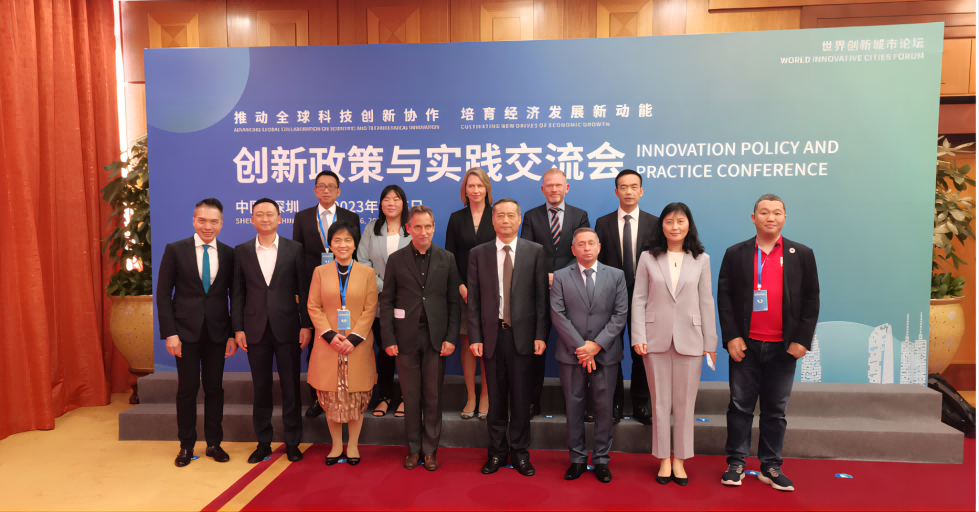
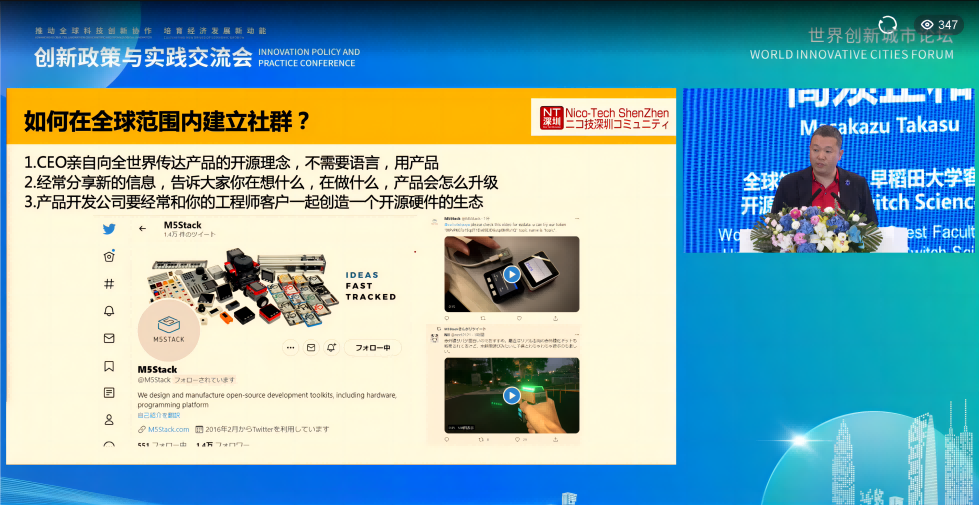
on March 6, The International Innovation Policy and Practice Conference was held in Shenzhen, China. Aiming to promote the establishment of the World Innovative Cities Cooperation Organization (WICCO) and build a platform for exchange, cooperation and resource-sharing among the world's leading innovative cities, this meeting brought together in Shenzhen mayors of some of the world's innovative cities, heads of famous technology enterprises, research institutes and venture capital institutions, and representatives of international organizations in China to discuss innovation, seek cooperation, and build an international innovation ecosystem.

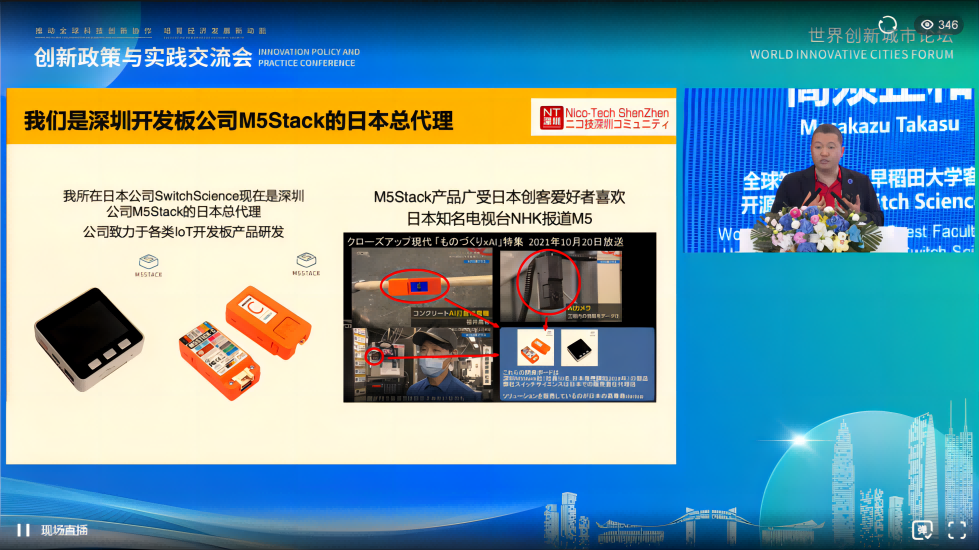
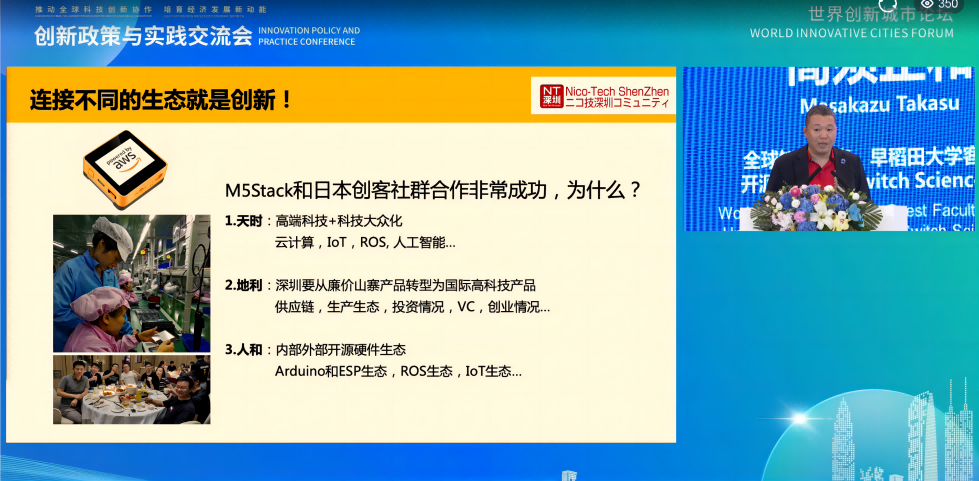
Takasu Masakazu, a world-renowned maker, visiting lecturer of Waseda University, and partner of Switch Science Inc., elaborated on the development history and advantages of Shenzhen's hardware supply chain industry and introduced the characteristics of Shenzhen as the world's "Silicon Valley of Hardware". Notably, in his speech, Masakazu Takasu devoted nearly a quarter of his speech to introducing a Shenzhen-based open-source hardware company, M5Stack, to the audience.

What's so special about M5Stack, a company with such a strange-sounding name at first glance?  And why is it being showcased to represent Shenzhen-based open-source hardware companies?

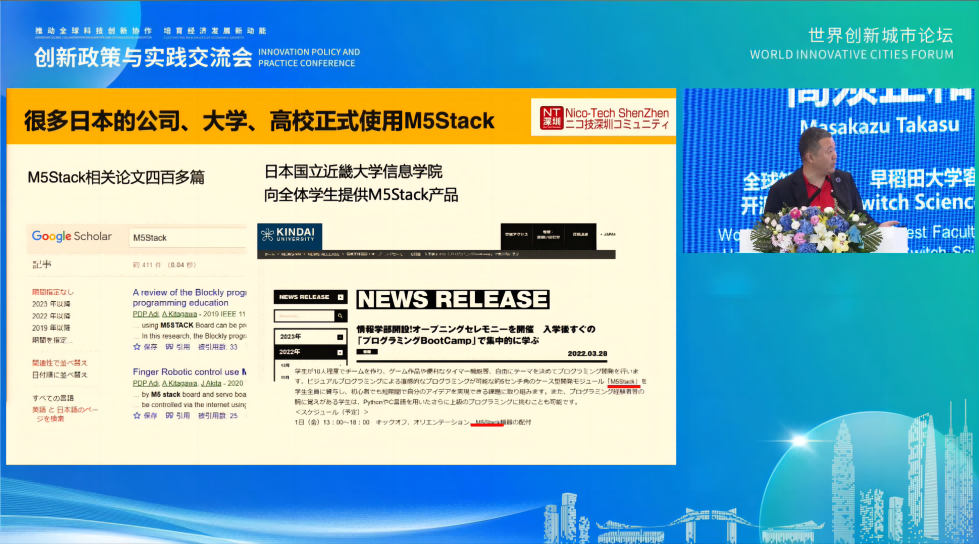
Founded in 2015, M5Stack is a famous Shenzhen-based startup. In Japan, M5Stack is a popular presence among makers. There are 44 operation guide book books about M5Stack on the Japanese Amazon website, and many Japanese companies, universities and colleges use M5Stack for prototyping, validation, teaching and working.

Additionally, many makers all over the world have come to love M5Stack because of its plug-and-play, modular, adaptable, and stacking capabilities. M5Stack also partners with major companies in the industry like Microsoft, Sony, Ericsson, Amazon Web Services, Foxconn, and Siemens.

Link the World by Open Source - the Story of M5Stack

01 The idea

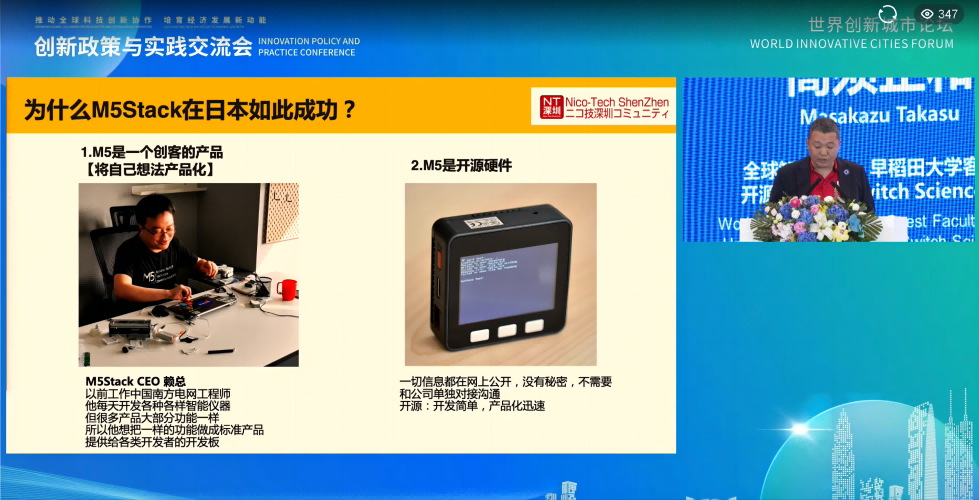
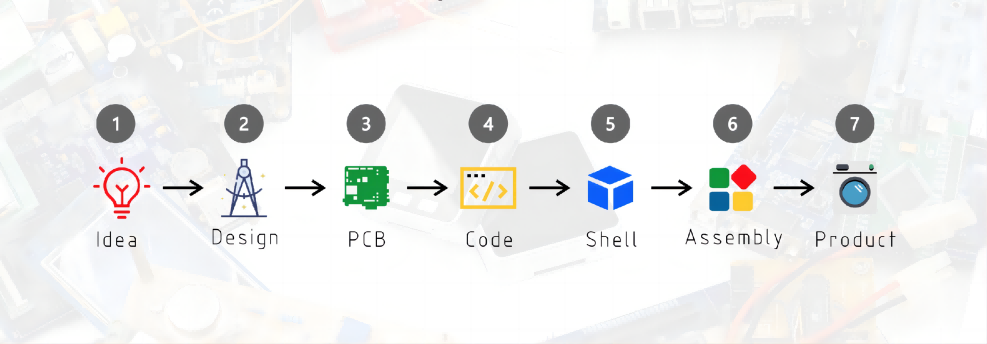
The story of M5Stack began with an idea from the founder Jimmy Lai. He was leaving Southern Grid and found a pile of discarded development boards in a drawer in his studio, which had become useless after having proven the product's functionality. In Jimmy’s opinion, these traditional development boards, with their exposed circuit boards and wires, were not only "crude" in appearance, but also complicated to operate and not conducive to further expansion.

And for individual developers, it can be costly in terms of time, effort and money to turn a rudimentary prototype based on a development board into a product that can be used in everyday scenarios.

"How about developing a modular development kit that could assist developers in swiftly developing and validating their concepts and working directly from idea to product," Jimmy Lai founded his company based on this notion.

02 Open source product system 

The "Stack" product, which has a modular design and a standard size of 5 cm by 5 cm, is plug-and-play, stackable, and extendable. Users can stack the modules with various functionalities to speed up product verification and development, and as a result, "M5Stack" was created. Today, M5Stack has 300+ SKUs, covering the full range of products from embedded controllers and communication modules to sensors, with high performance, reliability, scalability, and quick access to cloud platforms like Azure, and AWS.

03 A convenient graphical platform-UIFlow

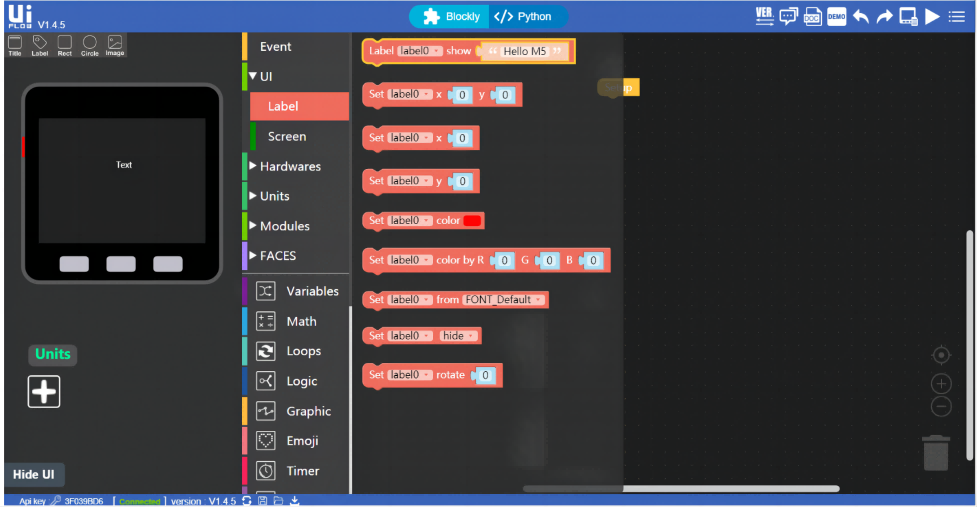
Hardware development can be simplified by modular design, but software programming is still a challenge for most individuals. UIFLOW, a low-code graphical programming IDE, was introduced by M5Stack with this problem in mind to offer the greatest experience for prototyping IoT applications from entry-level hobbyists to experienced developers. With UIFLOW, a user can construct a solution out of a single block or use many blocks to achieve more complex scenarios. 

04 Community operations and rapid development

On social media platforms and communities, M5Stack always shares new ideas and real-time product development processes with the fans and makes quick adjustments based on the inspiration and feedback from the users. As a result, it has promoted a positive community culture, with many users regularly offering their thoughts, open-source projects, and practical advice. This has helped to shape what M5Stack is today.

2023-03-15

IoT has reshaped our world in recent years as a technological revolution. With the development of IoT, M5Stack has gone through six years. The year 2022 is eventful. Here, we look back at the most important events of this year and express our sincere gratitude to our customers and friends.

01 Collaboration with Sony:Release of Atom Mate for toio™ in Japan

* toio™ is a registered trademark or trademark of Sony Interactive Entertainment Inc

Atom Mate for toio™ is the first project M5Stack and Sony have worked on together and immediately became a hit when released in Japan.  

* toio™ development using UIFloweloper of toio™

* Tanaka, the developer of toio™, is a big fan of M5

02 Collaboration with AWS:Launch of AWS IoT Edukit SimpleIOT Starter Bundle V1.0

Simple IoT, AWS's IoT workshop, provides free IoT programming knowledge and up-to-date code. Simple IoT (https://simpleiot.net/) is 100% open source, users can view and modify all data, code and services in their AWS account, and build their IoT projects with M5Stack's SimpleIOT Starter Bundle, an all-in-one package that allows people to start experimenting with a fully built and connected device in less than 5 minutes.

03 Collaboration with Microsoft: Launch of PnPFlow for Azure IoT Central Based on UIFlow

Project PnPFlow is the latest collaboration between M5STACK and the Azure IoT team. It provides a better collaborative experience for developers to build IoT plug-and-play devices without having to know the complexities of plug-and-play protocols and DTDL models. All they need to do is drag and drop blocks to build a business-centric application in UIFLOW. It is automatically provisioned on Azure IoT Central and works seamlessly with IoT Central's template-based web UI.

* PnPFlow demo 

04 M5Stack's Core2, Basic Core and COM.LTE Module have Been Added to Ericsson's Partner Marketplace Offering Catalogue


05 Listed in Digi-Key's Guide to Boards 2022

M5Stack's Stamp C3U, Stamp Pico and StickC plus are listed in this guide, plus Stamp C3U was ranked New&Notable.

06 Basic V2.6, Core2 and StickC Top Switch Science's TOP100 Best-selling Products

For the third year in a row, the M5 has taken the number one spot on the Switch Science TOP 100 list of best-selling products. And there are seven M5Stack products on this list: Basic V2.6 (#1), Core2 (#2), StickC Plus (#3), Core2 for AWS (#18), ATOM Lite (#21), Fire V2.6 (#23) and ATOM Matrix (#26).

According to Mr Yasui, Sales Director of Switch Science, M5Stack is good at collecting requirements at all levels to develop products, sharing development information with customers on social media platforms, actively adopting user opinions, and developing at a high speed, which is M5's strength that is difficult for other companies to catch up with.

07 Exhibited at the High-tech Fair - IOTE 2022, the 18th International IoT Exhibition, and Won the IOTE Gold Award for Innovative Products and the Excellent Product Award of the High-tech Fair

08 M5Stack Japan Creativity Contest 2022 Received 153 Outstanding Entries

09 Office Relocation

Moving to a new location, integrating resources and staff.

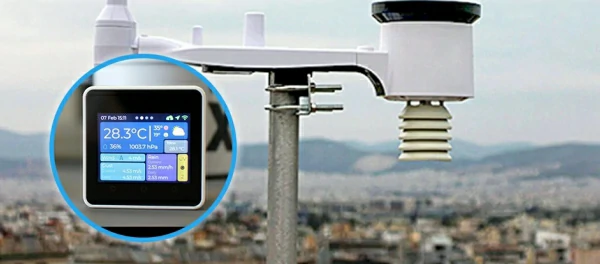
Looking back on 2022, there was both hardship and happiness. In 2022, M5 continued to release new products every Friday. 63 new products were released throughout the year, including embedded controllers, communication modules and a full range of sensors. Product applications also expanded into a wider range of areas, including blockchain, smart weather stations, smart storage and more.

M5Stack could not have come this far without the customers' and friends' support and help. We sincerely thank you and wish you a happy, safe and prosperous 2023.

2023-02-02

Christmas is celebrated by countries around the world. Traditions to celebrate the festival of love include a feast; giving gifts or cards; and enjoying church or public festivities, like singing Christmas carols and songs.

To celebrate the festival, Makers always show off their skills. In the M5Stack Christmas Contest 2022, M5 loyalists make a good performance. We hereby express our thanks to everyone who participated and helped make this contest a success! Let's see which ones came out on top from the 28 entries.

Magic Christmas Tree@IkeuchiRyota

 With a flick of the star wand, the Christmas tree lights up smoothly. Isn’t it like magic? In fact, it's based on the power of technology. Magnets are set underneath the Lego block with wires, Hall effect Unit is mounted on the bottom of the StickC console, when the star wand with iron inside connects to the magnet on the console, the lights on the Christmas tree start flickering as set before.

Chebyshev Linkage Robots @KantenNamako

 Its a comedy-style work with a mix of Asian and Western styles. To celebrate Christmas and new year, using M5Stack as the controller, Keiichi Matsui made two Chebyshev linkage (a four-bar linkage that converts rotational motion to approximate linear motion created by Chebyshev)robots. These two robots are decorated cutely, having a funny moving pace, conveying a happy atmosphere.

ATOM Christmas Tree@aaa_tu

 This Christmas tree stands out from the rest of the entries with its sense of technology and Minimalism. Just using M5ATOM Matrix and MAX7219 LED Display Module, @aaa_tu made this perfect project. The tutorial is uploaded on his website athttps://www.creativity-ape.com/entry/2022/12/25/025029 

Other Great Projects

M5stack Snow Ball@LuisLlamas

LuisLlamas is good at software interaction with M5Stack, making interesting projects. This time, Luis made a snowball with M5Core2, when the device turns direction, the snowflakes whirled down to the gravity direction gotten by the accelerometer in Core2, cute and vivid.

Displaying Air Quality CO2 Over Snowflakes @zeromem0

Zeromemo made a snowflake theme for Core2, a project that balances aesthetics and practicality. Hanged on a Christmas tree, this Core2 displays the time, temperature, CO2 concentration and ambient humidity information over snowflakes, presenting a festival atmosphere. Zeromemo uploaded the open-source code Github: https://github.com/zeromem0/snowingSCD41 

Shake with ATOM S3@its_hard_2_name

As a Christmas gift from M5 to the engineers friends, the first batch of ATOMS3 went out of stock as soon as released. The author of this project, IAMLIUBO, is M5's leader test engineer. He made a interesting shaking game with ATOM S3’s built-inn IMU. LIUBO is also responsible for UIFlow 2.0. As he revealed, UIFlow 2.0 will be online before the Chinese New Year, stay tuned for it!


2023-01-06

Birds can broadcast news? Robot babies can drink milk? People can use Ultrasound to measure wind speed? At M5Stack Japan Creativity Contest 2022, technology and creativity collide, turning every idea into reality.


Innovation can promote the advance of human civilization. Deep inside, everyone’s heart hides a "seed" of innovation. Upholding the concept of "Quick&Easy IoT Development", M5Stack helps every "seed" sprout and grow into a huge tree with its easy-to-develop hardware and software solutions. In collaboration with Switch Science, M5Stack launched the M5Stack Japan Creativity Contest 2022. This month, this contest came to an end, and we received 153 creative entries from https://protopedia.net/event/m5stack2022, let’s find out the winners.

First Prize*1


Second Prize*3


Third Prize*4


Special Prize*5

Industrial Applications Prize

Industrial Applications Prize
 

Commercial Promotion Prize


Research Idea Prize

Visual Effect Prize


M5Style Prize

2022-10-31